
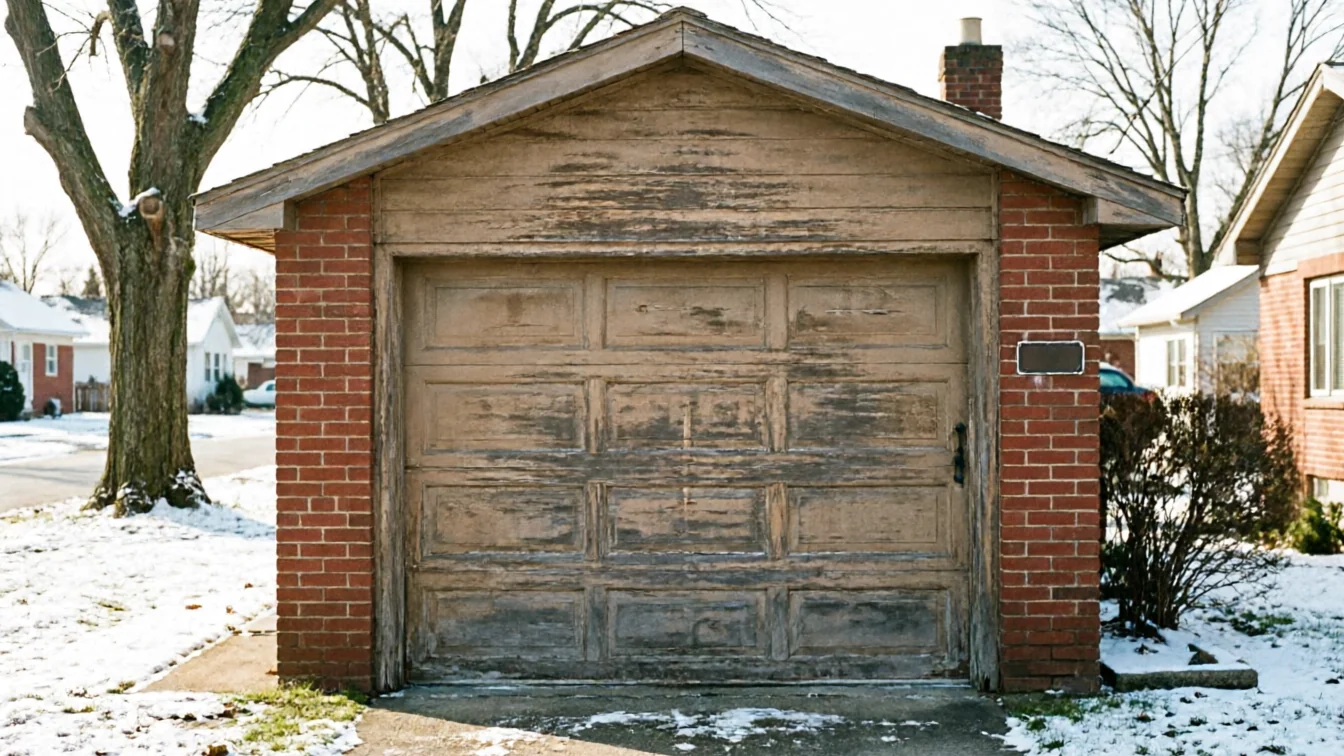
When a Cedar Rapids Garage Door Is Worth Fixing
Cedar Rapids homes mostly date to the 1960s and 70s.
Read moreBlogCedar Rapids, IA · 4 min read
Cedar Rapids homes mostly date to the 1960s-70s with a median build year of 1977. Here's how that housing stock and our cold climate affect your garage door.
Local detail
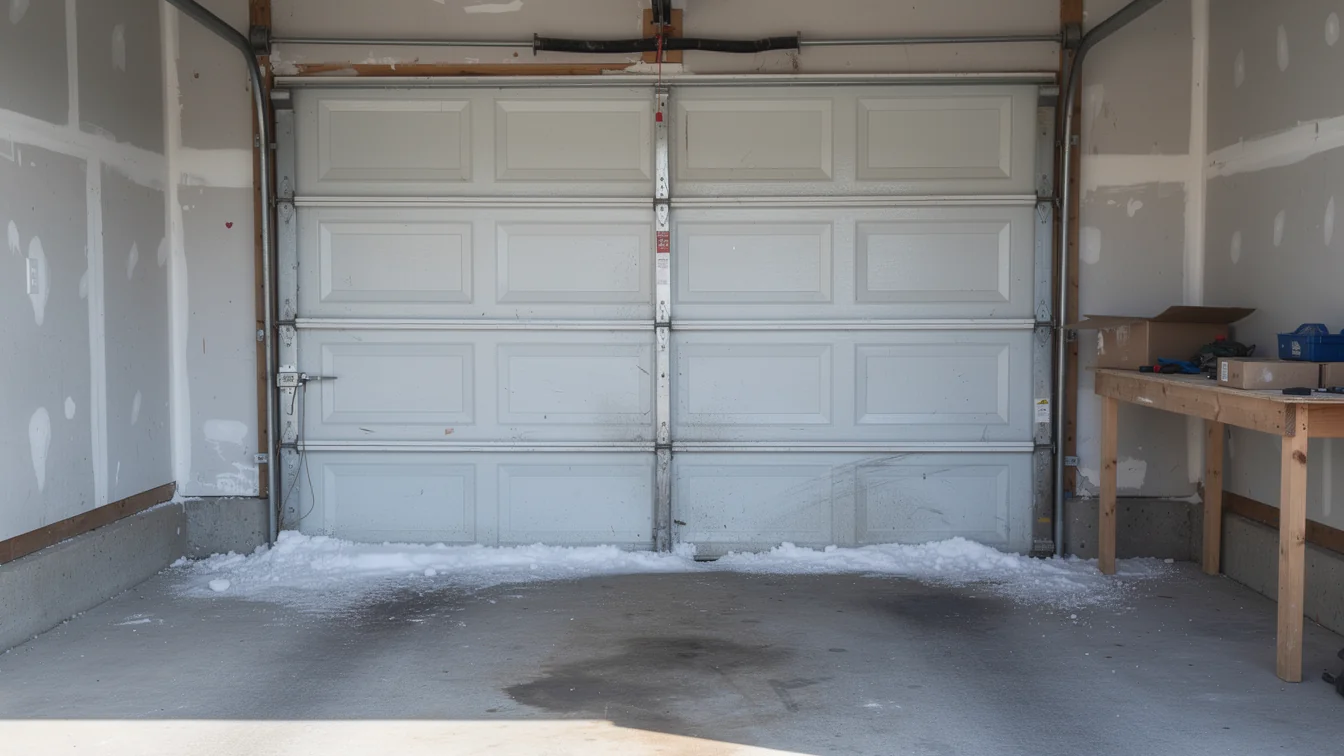
Across the Cedar Rapids service area, housing spans 1943 to 2011, but the median build year lands at 1977, and most of the stock in the 24 named areas we cover is from the 1960s and 70s. That matters because doors and track hardware from that era were built for a different climate expectation than what we actually get. This region sits in a cold, moderate band - real winter cold, real freeze-thaw cycling, and enough humidity swing between seasons to work on wood jambs and steel track alike.
A door installed in 1968 or 1974 wasn't engineered with today's weatherstripping or insulation standards in mind. Track alignment on these older setups tends to drift as the house settles over fifty-plus years, and cold snaps make any existing misalignment worse - steel contracts, rollers bind, openers strain against resistance they weren't fighting in July. In the 24 named areas we serve, from the Southwest Area to Oakhill Jackson to Cedar Hills, this is the same underlying condition even though the houses look different block to block.
We don't treat every call the same because of this. A garage door on a 1965 ranch and one on a 2005 build need different diagnostic starting points, even on the same street.
The area
The mistake we see most is someone lubricating a noisy roller or track and calling it fixed, when the actual issue is a door that's 40-plus years old fighting hardware that was never upgraded. With a median housing age putting a lot of Cedar Rapids garages into that 1960s-70s window, this isn't rare - it's typical. Original torsion springs and single-wall steel track on houses from that stretch were not built around decades of cold-season cycling, and lubricant doesn't fix a spring that's lost tension or a track that's bent from years of thermal movement.
The other common mistake is waiting through a cold snap because the door 'still works, just slower.' In a cold moderate climate, a door that's merely stiff in November can seize or bind hard by January, and the opener motor takes the abuse in between - burning out trying to force a door that needs physical work, not electrical.
We'll be honest about where this leads: on original hardware from the 1960s or 70s, a spot repair sometimes buys a year, sometimes a week. We'd rather tell a homeowner that up front than have them pay twice.
What we find
With roughly 50,436 households across the area and 23,691 owner-occupied houses, a large share of the calls we get trace back to the same root cause: original hardware aging out at the same time, because so much of the stock went up in the same twenty-year window. That's not a coincidence - it's a housing boom from the 1960s and 70s that's now uniformly in the age range where springs fatigue, tracks warp, and openers from later retrofits reach their own end of life.
Median household income across the area runs around $95,000, which puts replacement - not just repair - within reach for a lot of homeowners here when a door is genuinely past the point of patching. We see that choice play out often on houses from the 1977 median build year: the door itself is sound, but the spring system and opener are not, and layering new motor hardware onto decades-old track is a short-term move.
We won't push a full replacement on a door that just needs a spring. But on a door where the track is bent from cold-season flexing and the opener's already been replaced once, we'll say so plainly.
How we work
We don't have a price list to publish here - every job on a house from the 1960s or 70s comes in different depending on whether it's a spring swap, a track realignment, or a full door-and-opener replacement. What we can tell you is what drives the cost on this housing stock specifically: single-wall track common on 60s and 70s builds often needs full replacement rather than adjustment once it's bent, and that adds labor a straightforward spring job doesn't.
One honest limitation: if your door's track or panel is a size or style that stopped being made decades ago, matching parts can mean a longer wait than a same-day repair on newer hardware. We'll tell you at the time of the call whether we're looking at a quick fix or a parts-order situation, rather than guessing low to get the job.
Questions
In a cold moderate climate, steel track and torsion springs contract and lose some give as temperatures drop. On a door from the 1960s or 70s, that effect is more pronounced because the hardware wasn't built to current cold-weather tolerances. It's often not broken - but repeated cold cycling on old hardware eventually does cause real failure.
If your house falls in the common 1960s-70s build range for this area, likely yes. Openers retrofitted onto original track built decades earlier often strain against resistance the original door design didn't have, especially once rollers or track have drifted out of alignment with age.
We work across the Cedar Rapids service area, including nearby communities such as Fairfax, Hiawatha, Marion, Ely, Robins, and Swisher, among other towns within roughly 15-20 miles.
Recommendation
More garage door guides for Cedar Rapids homeowners.
Cedar Rapids homes mostly date to the 1960s and 70s.
Read more
Cedar Rapids homes built mostly in the 1960s-70s face cold-climate wear on original hardware.
Read more
Cedar Rapids housing runs 1943-2011 with most stock from the 1960s-70s.
Read moreReady when you are
Cedar Rapids Garage Door Pros repairs and installs garage doors, springs and openers in Cedar Rapids, IA and the surrounding area.