
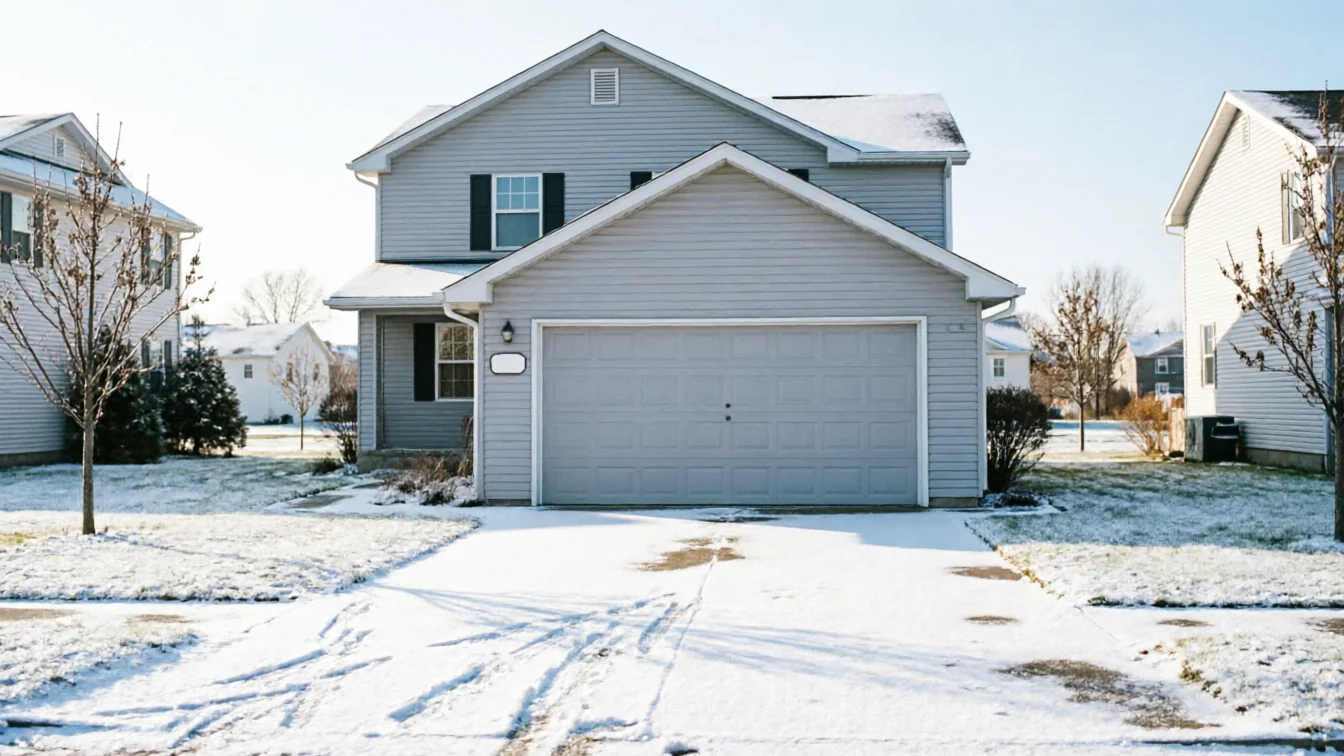
Garage Doors Built for Cedar Rapids Winters, Not Just Any Winter
Cedar Rapids housing runs 1943-2011 with most stock from the 1960s-70s.
Read moreBlogCedar Rapids, IA · 4 min read
Cedar Rapids homes built mostly in the 1960s-70s and our cold winters both push doors off track. Here's what actually causes it and what it runs to fix.
Local detail
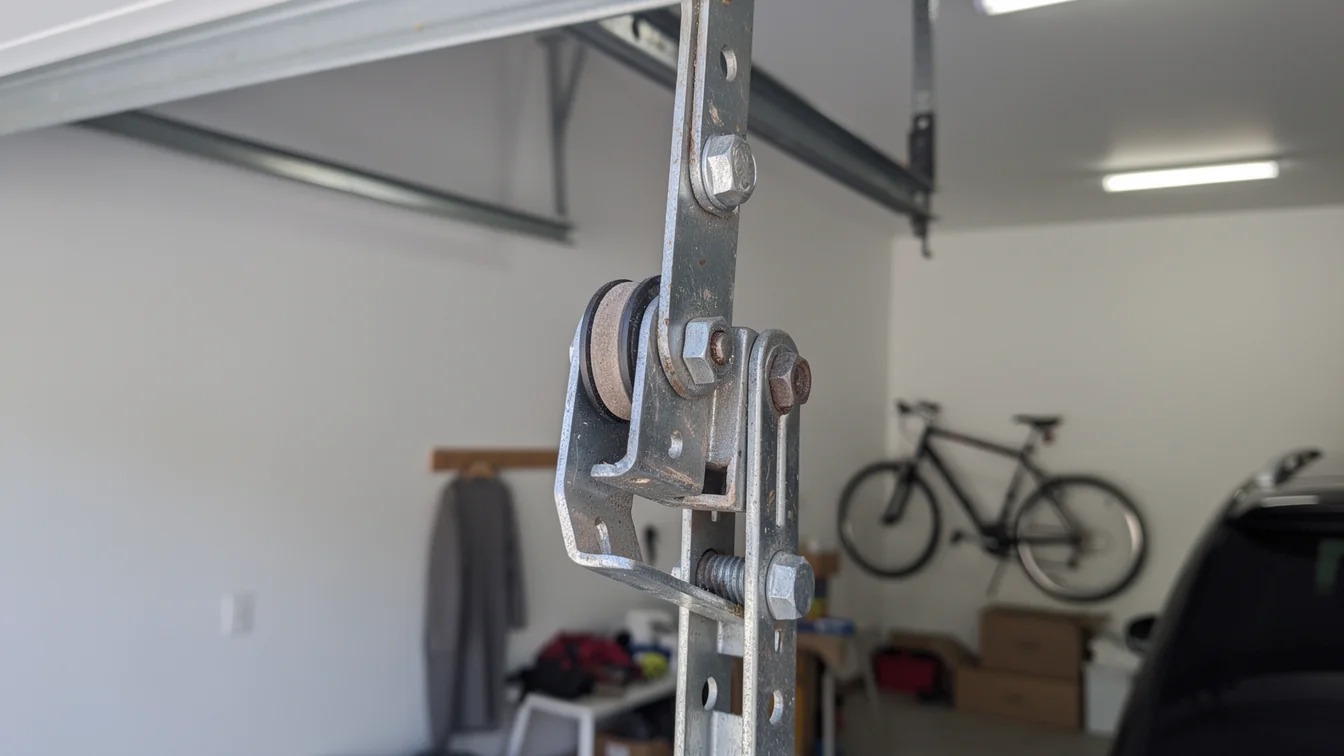
Cedar Rapids housing runs from 1943 up through 2011, but the bulk of what we work on across the 24 named areas we cover was built in the 1960s and 70s. That matters for tracks because the garages from that era were framed to the standards of the day, and over fifty-plus years the stud walls and slab have shifted a little, which throws the track brackets out of plumb by small amounts you can't see standing in the driveway. Add our cold-moderate climate band and you get a second push: steel track contracts in sub-freezing air, and rollers that were running a hair loose in July bind or chatter in January. A door that was tracking fine all summer can start grinding at one roller the first hard cold snap. Neither of those two forces alone usually knocks a door clean off the track. It's the combination - an already-marginal bracket from decades of house movement, then a cold snap that stiffens the rollers and increases the load on that one weak spot - that does it. That's why we see more off-track calls in this area clustered right after the first real cold stretch each year, not randomly through the season.
The area
The mistake we see most in homes from that 1960s-70s stock is someone noticing the door rubs or squeaks at one spot, spraying it with whatever's on the shelf, and calling it done. On a track bracket that's already loosened from decades of minor house settling, lubricant doesn't fix alignment - it just quiets the symptom for a week or two. The other version of this mistake is ignoring a bent track section because the door still opens. A slightly bent track under cold-stiffened rollers is exactly the setup that lets a roller jump the rail entirely, usually on the coldest morning of the stretch, usually with the door half open. We'd rather get a call about a noisy roller in October than an off-track door in January.
What we find
By the time a door is actually off track, you're not looking at a lube-and-tighten job. The roller has either come out of the rail or the track itself has been bent or pulled from its brackets, and in our climate band that twisted metal is often brittle-cold on top of being bent, which makes it unsafe to force back by hand. With housing stock in this area running a wide spread - some houses from 1943, plenty from the 1977 median, some as new as 2011 - the bracket hardware and track gauge vary house to house, so there isn't one generic fix. We check the wall framing the bracket is screwed into, not just the track, because if the wood's loose that's the root cause and a new track will come off the same way inside a year.
How we work
We can't quote a number here without seeing the door - a bent track on one side is a different job than two rollers and a bracket, and that's the honest answer. What we can tell you is what drives the cost up: how many track sections are damaged, whether the cable and spring took stress when the door jumped, and whether the wall framing behind the bracket needs reinforcing, which is more common in the older end of our 1943-1977 housing. A straightforward one-side track and roller repair is a smaller job than a full track replacement on both sides, and we'll tell you on site which one you're actually looking at before any work starts.
Questions
Steel track and rollers contract in cold air, which tightens clearances that were already marginal from years of minor house settling - common in Cedar Rapids' 1960s-70s housing stock. The combination of a slightly loose bracket and cold-stiffened rollers is what usually pushes a roller off the rail, which is why we see more of these calls right after the first hard freeze.
We'd rather you didn't. A bent track in cold weather is brittle and under spring tension, and forcing it can snap a cable or drop the door. Leave the door down, don't run the opener, and call it in.
Not always. If one section is bent and the bracket into the wall framing is still solid, we can often repair that side alone. If the framing's loose - more common in our older homes - replacing just the track won't hold, and that's worth knowing before you pay for a partial fix.
Yes. Houses from the 1960s-70s stock common across this area have had decades for wall framing to shift slightly, which is often the real cause behind a bracket pulling loose. Newer builds in the area, up through 2011, usually have tighter original framing and fewer of these calls.
Recommendation
More garage door guides for Cedar Rapids homeowners.
Cedar Rapids housing runs 1943-2011 with most stock from the 1960s-70s.
Read more
Grinding, popping, slamming - Cedar Rapids homes built in the 1960s and 70s make specific noises as original hardware ages in cold-moderate winters.
Read more
Cedar Rapids homes built mostly in the 1960s-70s face cold-climate wear on original hardware.
Read moreReady when you are
Cedar Rapids Garage Door Pros repairs and installs garage doors, springs and openers in Cedar Rapids, IA and the surrounding area.