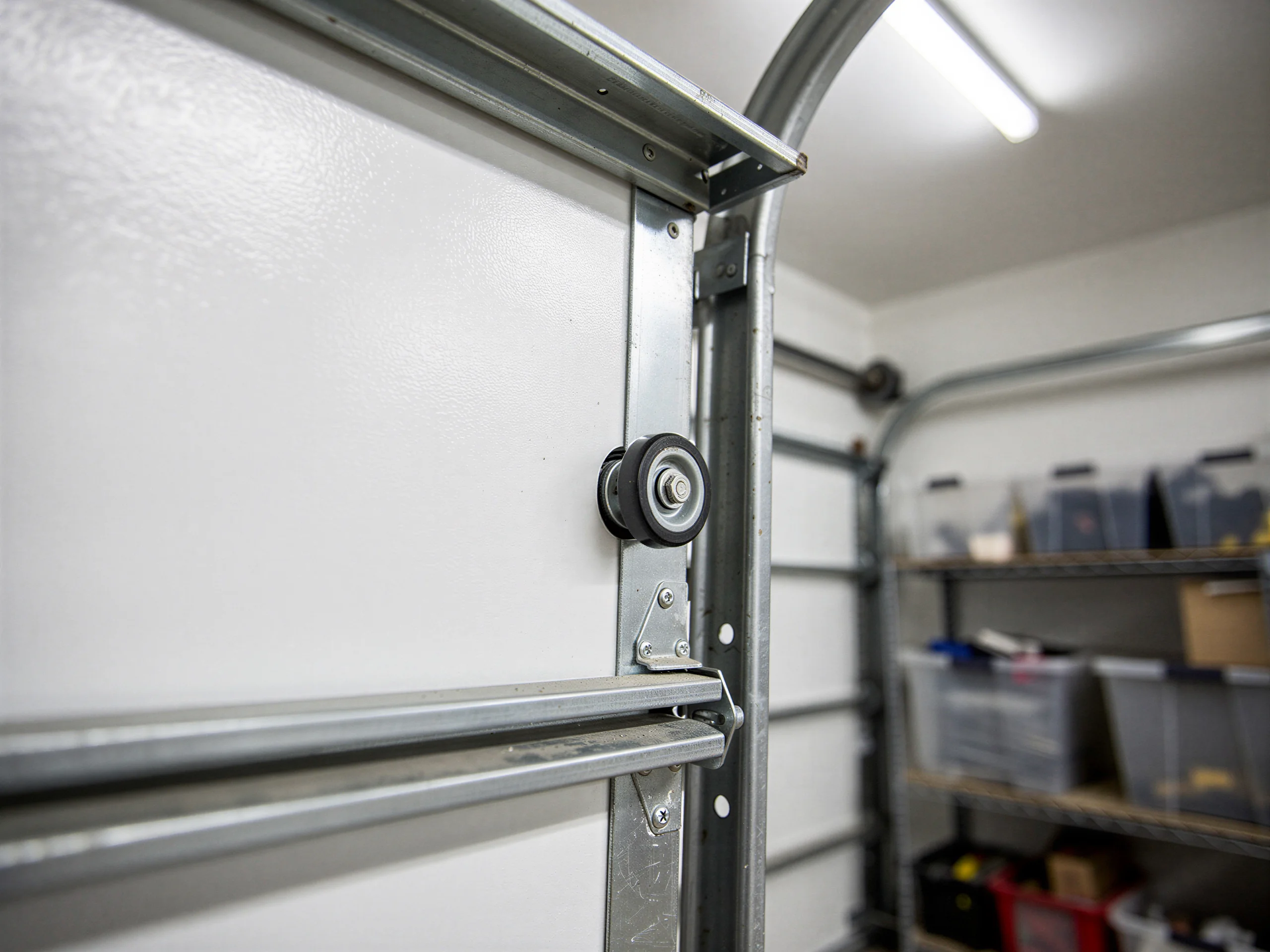
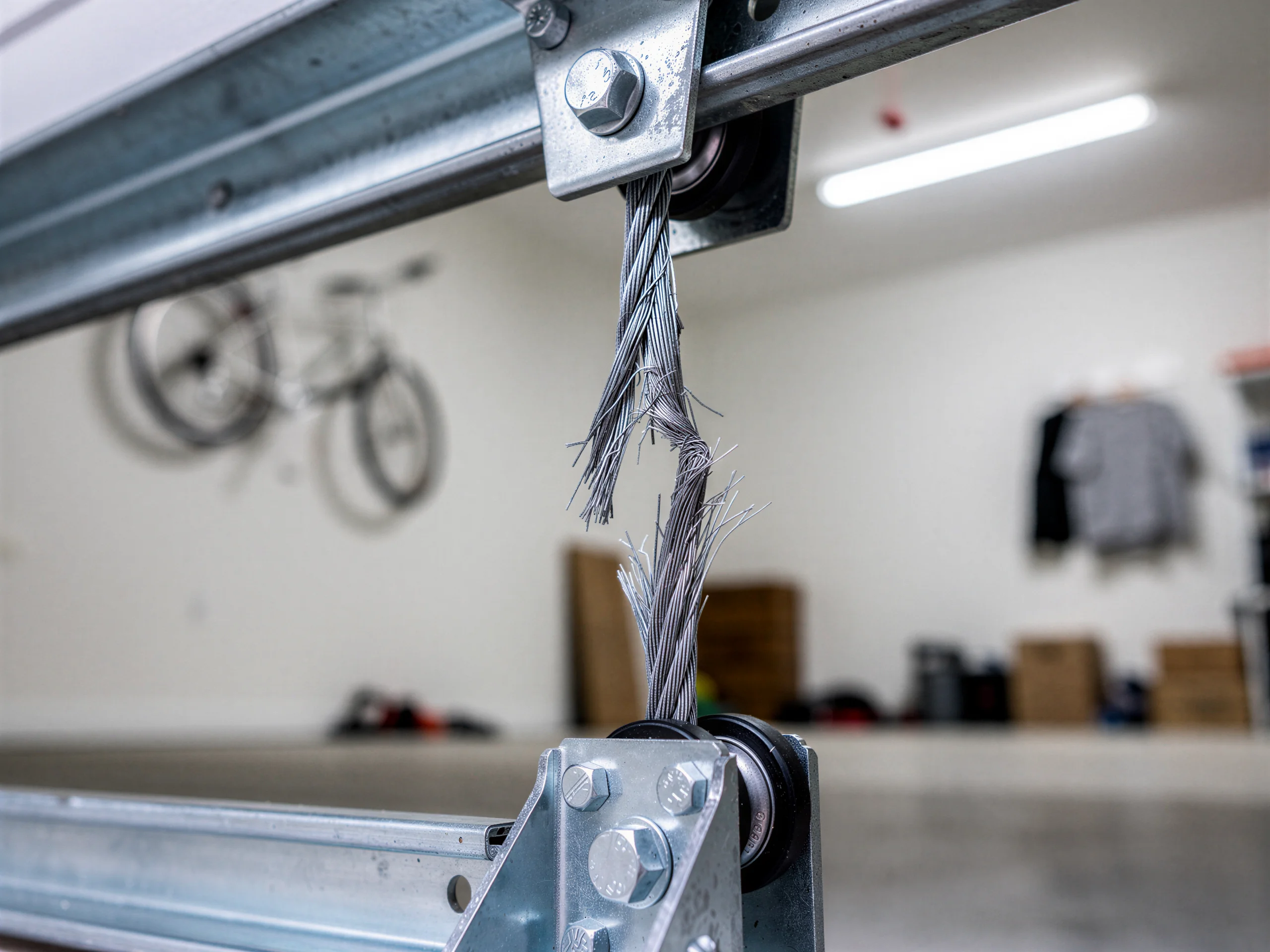
Bottom cables slip drum
That hardware is simple, but it has one weak point: the cables that ride the bottom corners of the door can slip their drum or fray, and when they do, the door walks sideways out of its track instead of sliding straight up.
Mount Vernon, Cedar Rapids
Mount Vernon homes built around 1975 carry original extension-spring hardware that jumps track easily. We drive out from Cedar Rapids, 13 miles away, to set it right.
Warning signs
Most houses in Mount Vernon went up around 1975, and that era of construction leaned on steel sectional doors hung on extension springs with loose side cables rather than the centered torsion bar you'd find on newer builds.
That hardware is simple, but it has one weak point: the cables that ride the bottom corners of the door can slip their drum or fray, and when they do, the door walks sideways out of its track instead of sliding straight up.
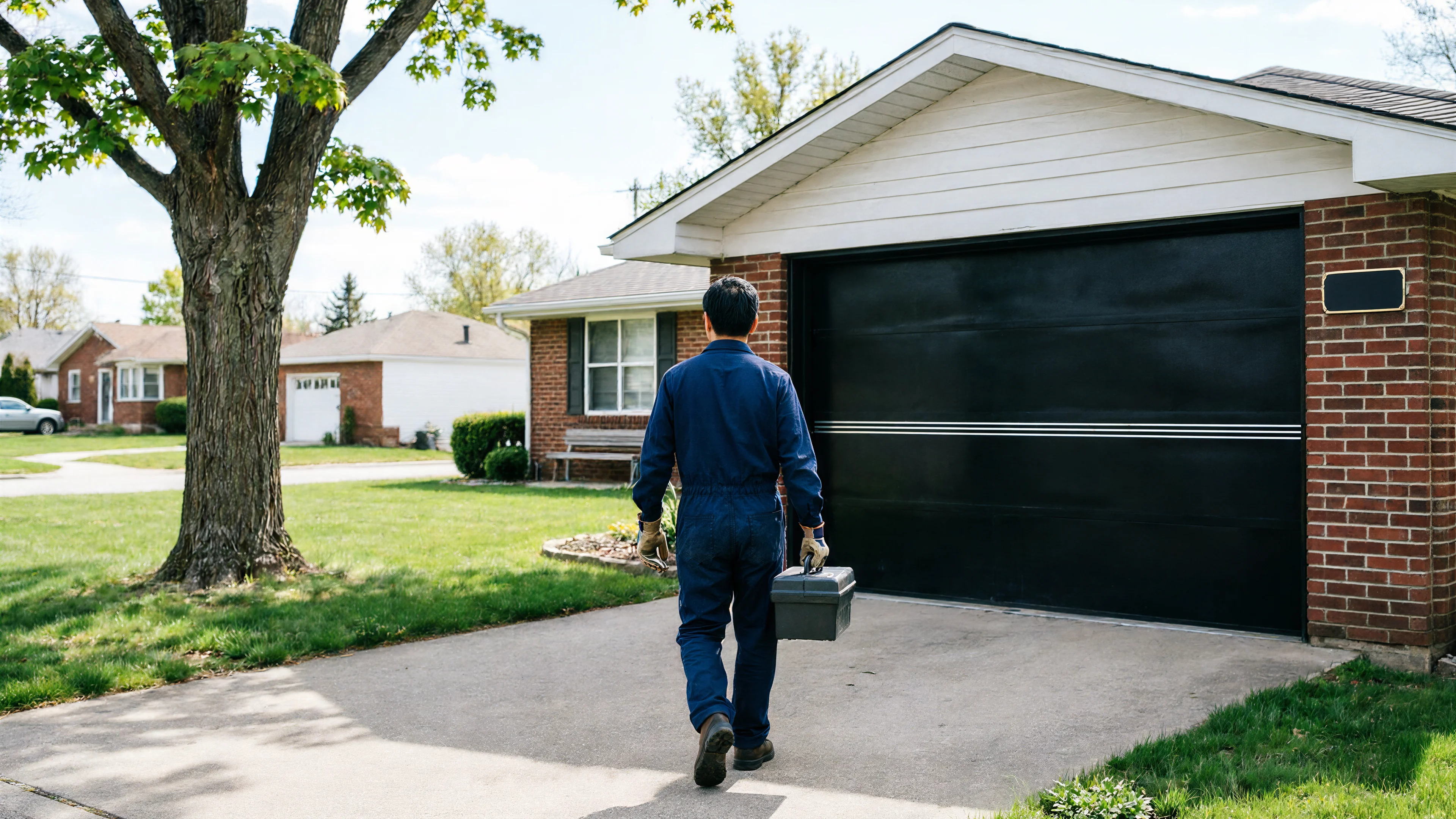
You'll see it as a door that hangs crooked in the opening, binds halfway through a cycle, or pops a roller clean out of the channel with a bang. On a door this age, it's often not a one-time accident - it's a cable or hinge that's been wearing loose for months and finally let go.
Cold snaps make it worse, since old lubricant stiffens and rollers that were already marginal lock up and jump the rail instead of rolling through it. If your door came with the house, there's a decent chance nobody's touched the cable drums or the track bolts since the original builder hung them, and loose track bolts are the single most common cause of a door that rides off true.
Watch-outs
An off-track door on original 1970s hardware is rarely a single clean break. The usual chain is a loose or frayed extension-spring cable, which lets the door tilt a few degrees as it travels, which then forces a roller against the edge of the track until it climbs out.
Keep running the opener after that and you can bend the track itself, crack a stile at the corner, or snap the cable the rest of the way with the door hanging.
On a two-car door this is worse, since more weight is riding on the same undersized hardware than the original builder sized it for by today's standards. We also see hinges worn oval from forty-plus years of cycles, which lets the panel flex and walk even when the cables are fine.
None of this is a DIY fix once the door is actually off the rail - the springs are under load, and extension-spring setups don't have the safety cables that newer torsion systems carry, which makes them more dangerous to force back by hand.
Pricing
We don't have a flat number to quote here without seeing the door - whether it's a single or a 16-foot double, how far the track is bent, and whether the cable or the drum failed changes the job. What we can tell you is the household picture in Mount Vernon: median income here runs around $106,000, higher than a lot of the towns we cover, and that generally means owners choose to fix hardware properly rather than patch it twice. A straightforward re-track with new rollers is a different job and a different bill than one where the track needs replacing or a stile is cracked. We'll look at the door in person and tell you straight whether it's worth repairing or whether, on hardware this old, replacement makes more sense long-term.
The repair
Getting a door back on track starts with releasing tension safely - on extension-spring doors that means clamping the springs before anything else moves, since there's no safety cable running through the coil to catch it if it lets go.
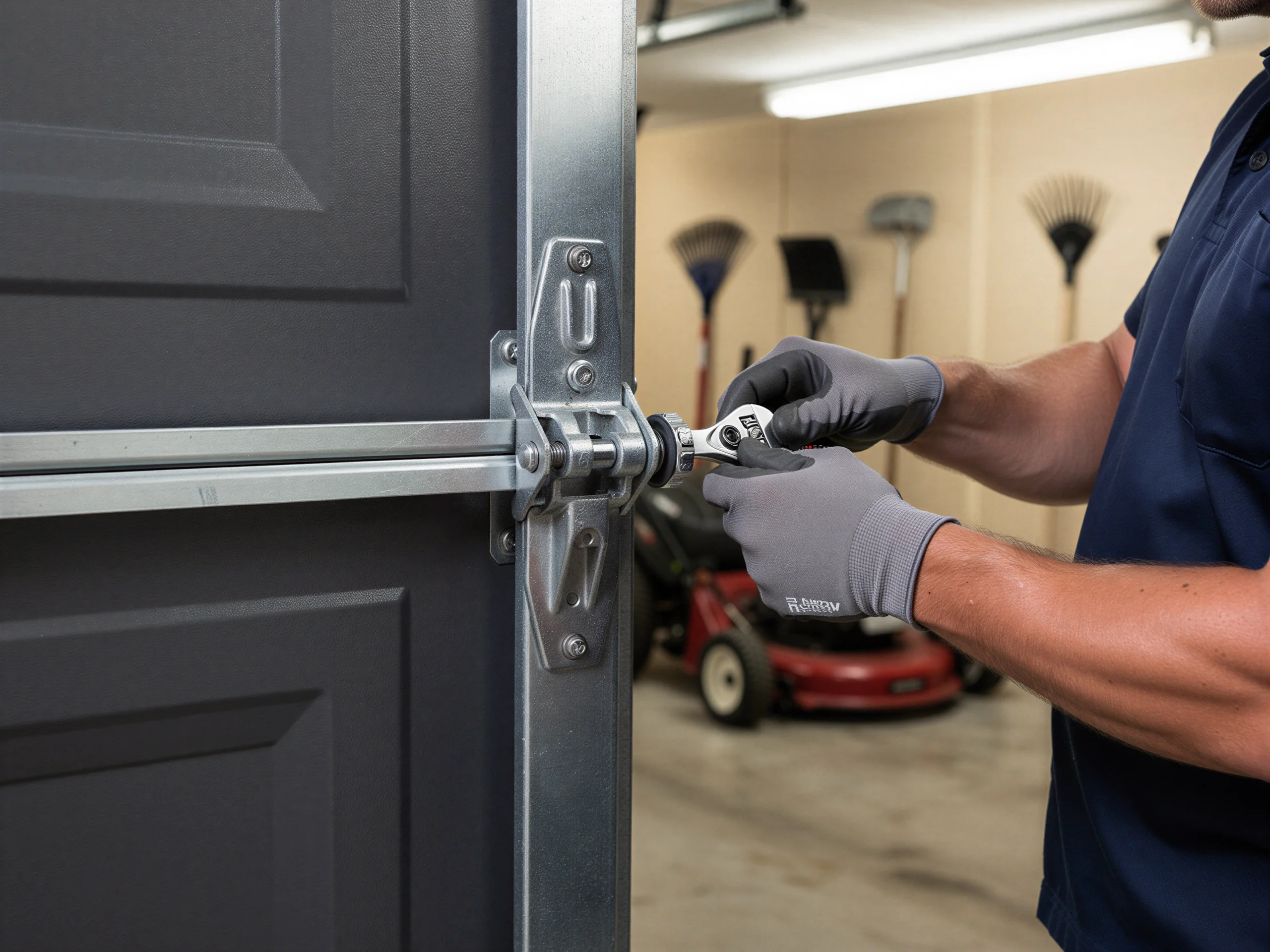
From there we check every roller and hinge along both tracks, not just the one that jumped, because on a door this old if one hinge is worn the others usually aren't far behind. Bent track gets straightened or swapped depending on how far it's bowed.
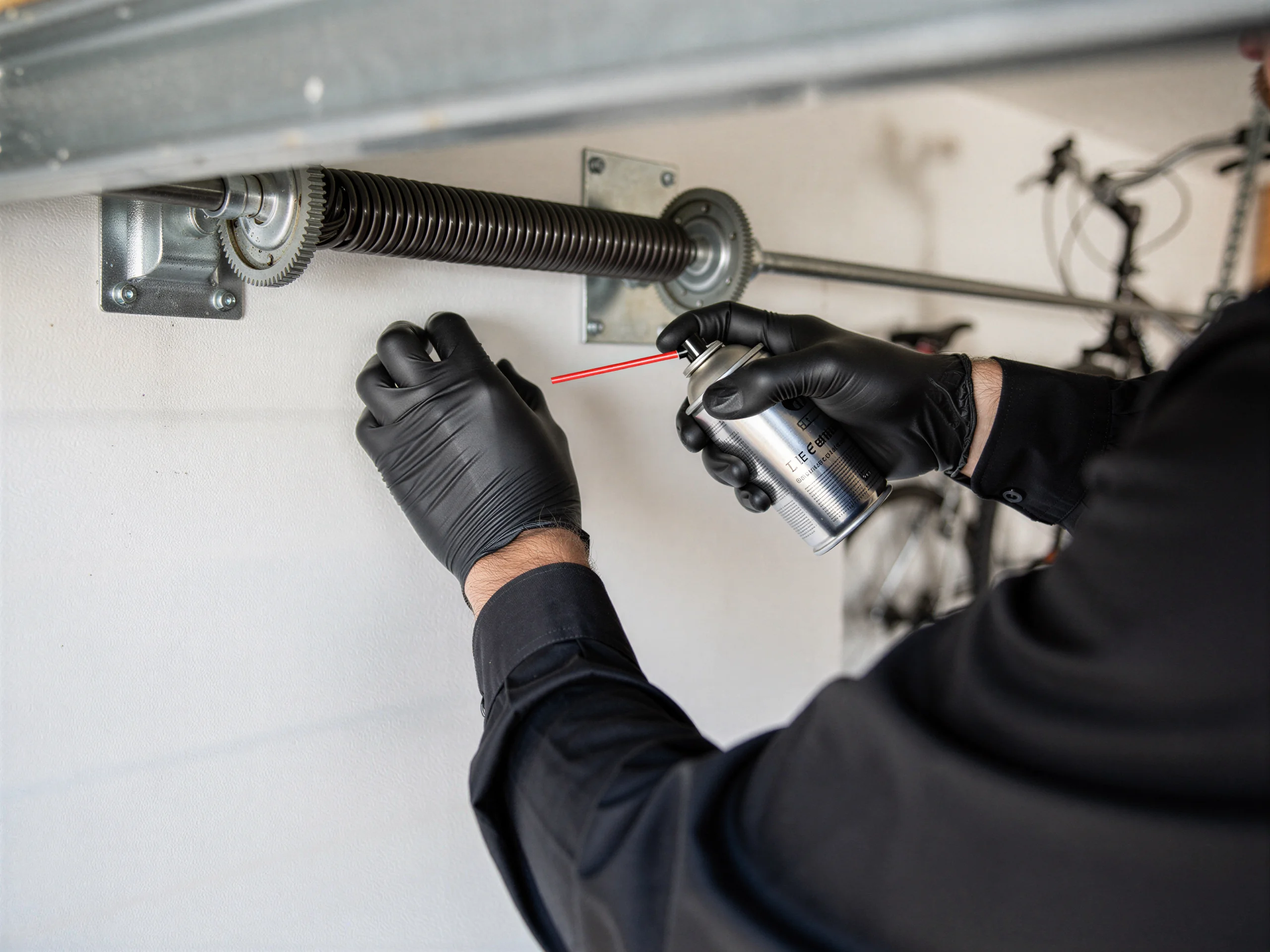
Cold-weather call-outs take a little longer, since stiff lubricant and contracted metal mean we're also checking that the rest of the hardware isn't about to follow the same path once it warms back up and starts cycling hard again.
We true up the door, re-tension the springs, and run it through a dozen full cycles before we call it done, watching the roller path the whole time.
Booking
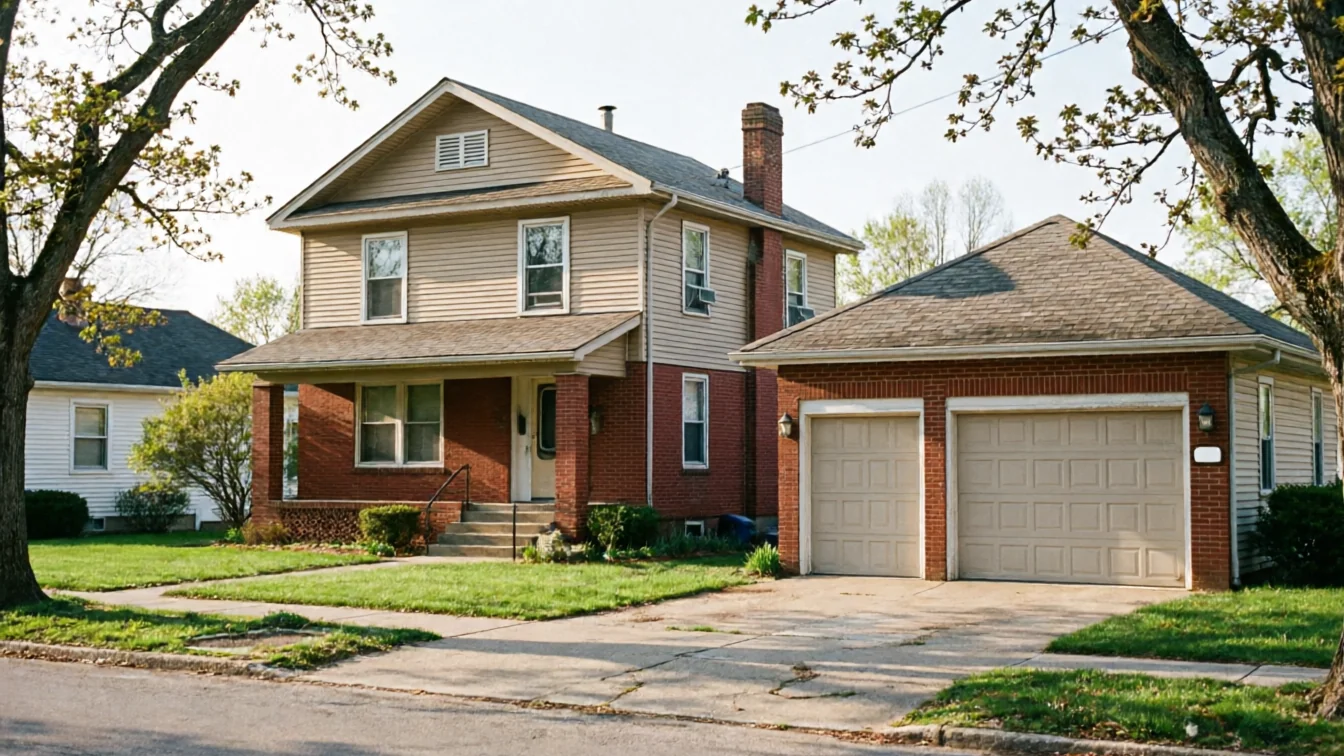
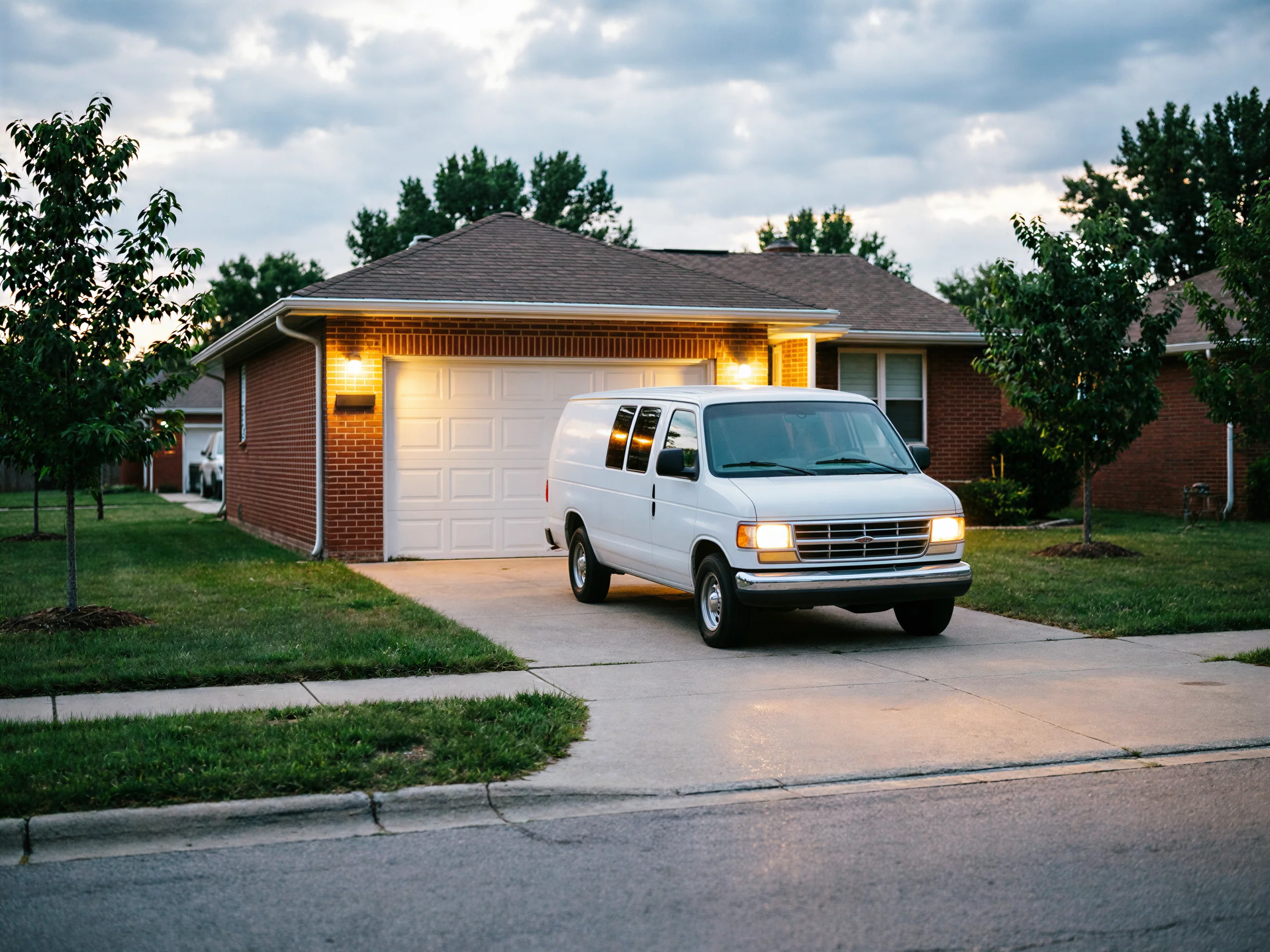
We cover Mount Vernon out of Cedar Rapids, about 13 miles away, so a call here goes on the same truck route as the rest of the service area rather than a dedicated local crew. Describe what you're seeing - a door that hangs crooked, a bang when it opens, a roller visibly outside the track - and we'll bring the right parts for 1970s-era extension-spring hardware rather than guessing on site. With roughly 1,195 households in town, we're not out this way every single day, so a clear description up front saves a second trip. You can see the rest of what we handle in Mount Vernon on our local page, or read more on off-track repair generally on our Cedar Rapids service page.
Questions
Houses here are mostly from the mid-1970s, and the extension-spring hardware from that era relies on lubricated cables and rollers that stiffen up hard in cold weather. A roller that's already worn can lock instead of roll when it's cold, and that's often what pushes it off the rail rather than through it.
No. Extension-spring doors, which is what most Mount Vernon houses from this era have, don't carry a safety cable through the spring coil. If the spring is still under tension when you try to move the door, it can let go violently. Leave it where it sits and call it in.
No, we run out of Cedar Rapids, about 13 miles away, and cover Mount Vernon on the same truck route as the rest of the surrounding area.
Depends how far it's bent and how long the door ran off-rail before you shut it down. A door caught early usually just needs the track trued up and rollers replaced; one that kept cycling can crack a stile or bend the track past straightening, which means a section gets swapped.
Explore more
Ready when you are
Cedar Rapids Garage Door Pros repairs and installs garage doors, springs and openers in Cedar Rapids, IA and the surrounding area.