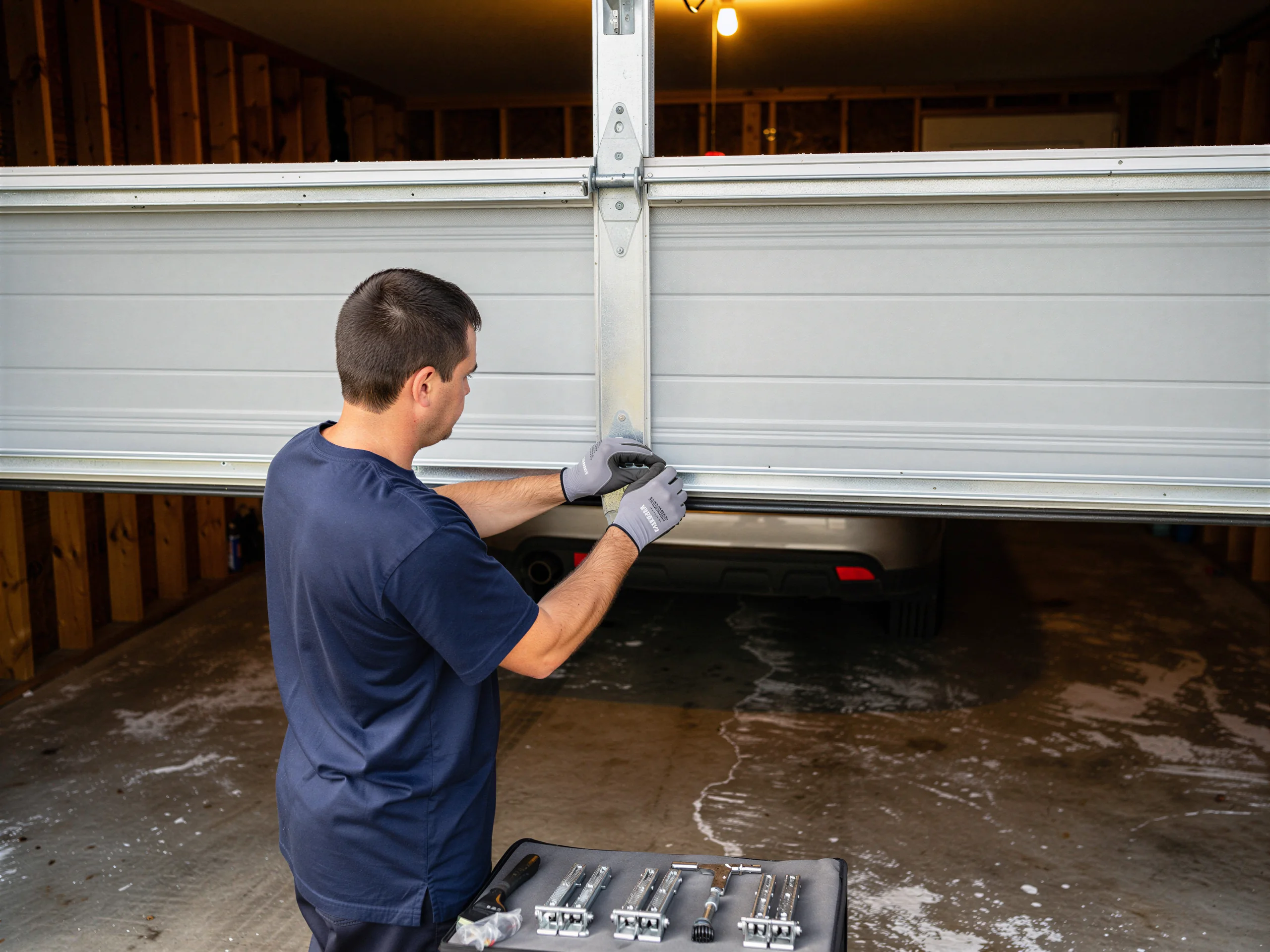
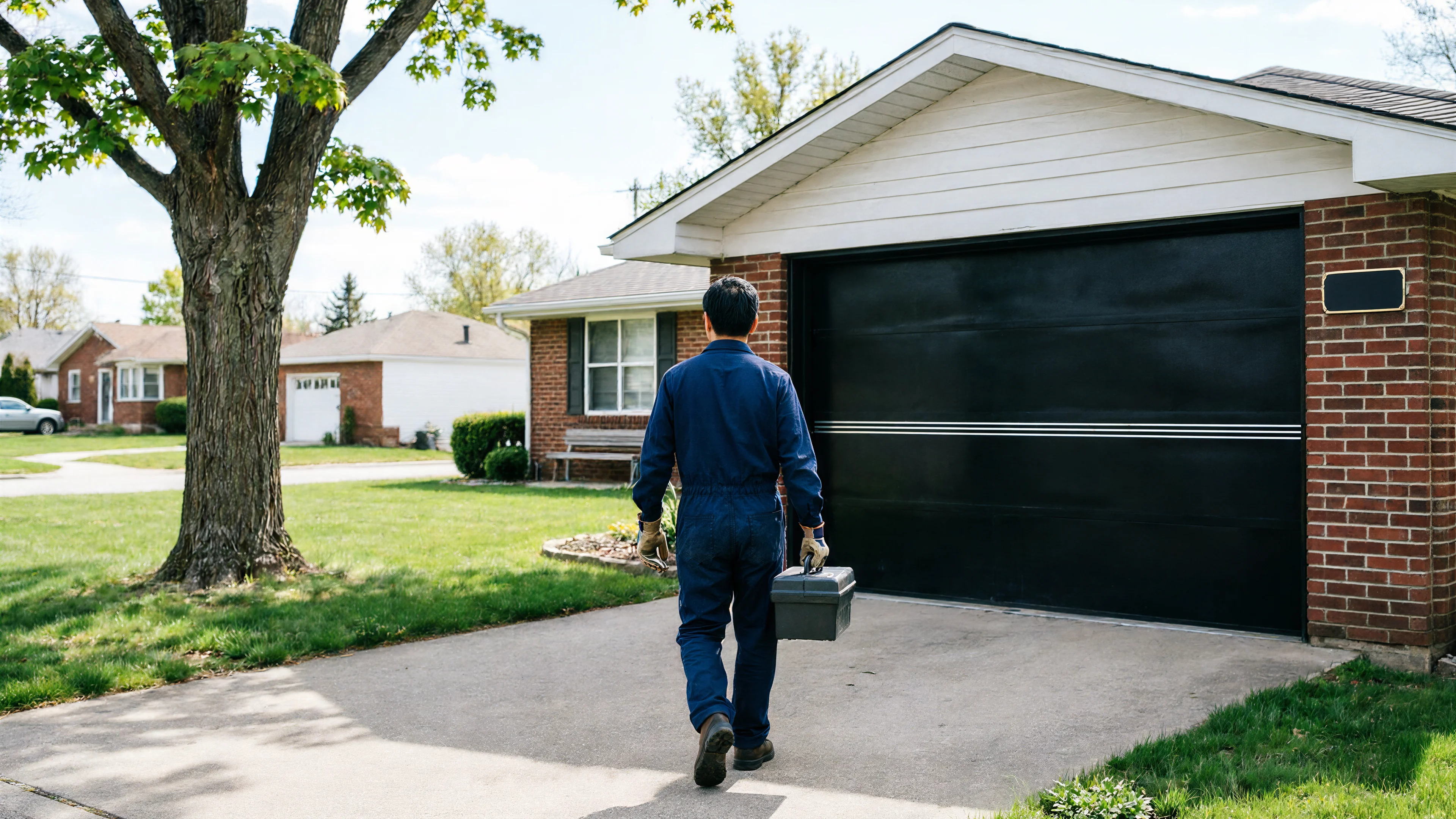
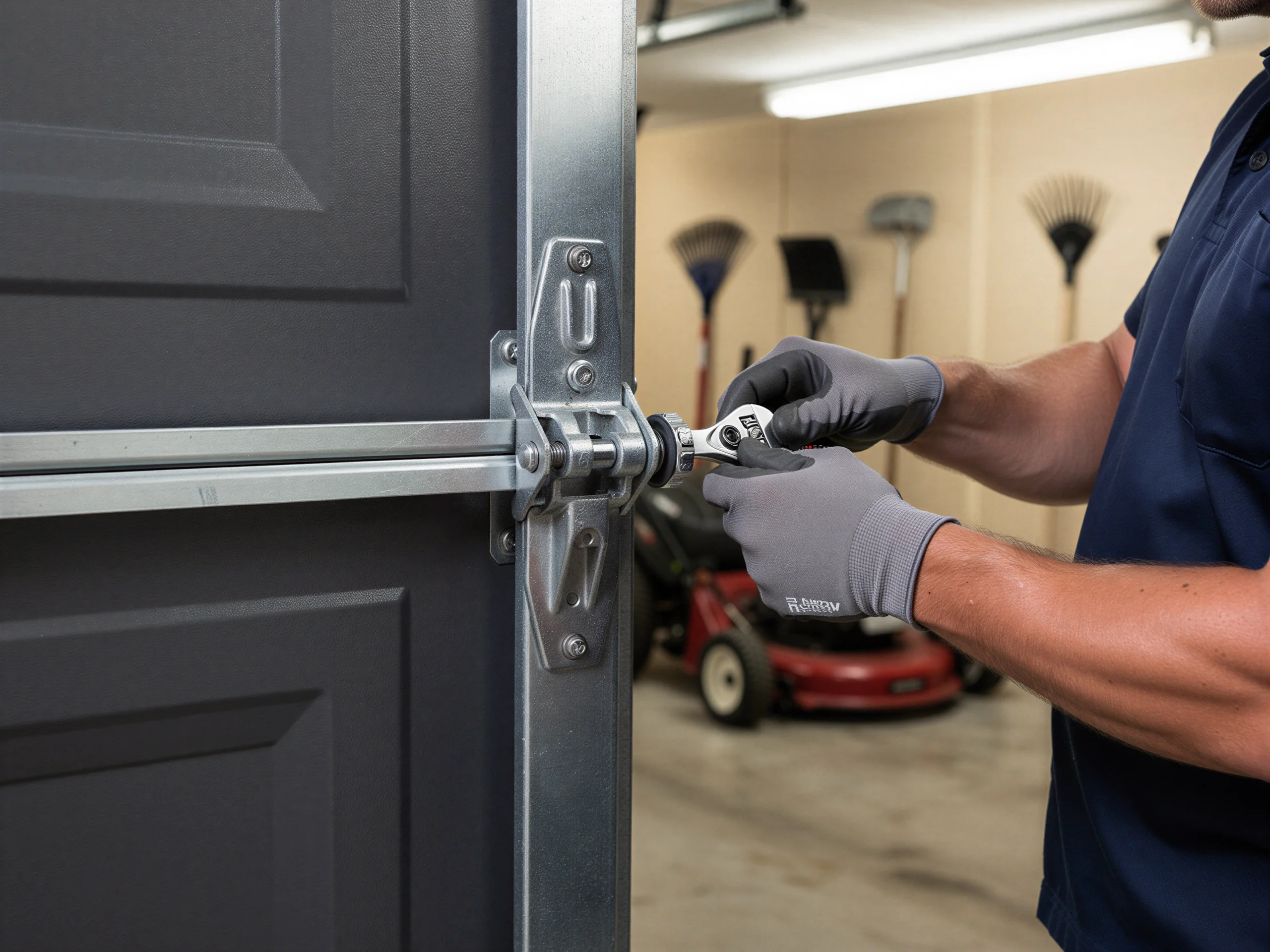
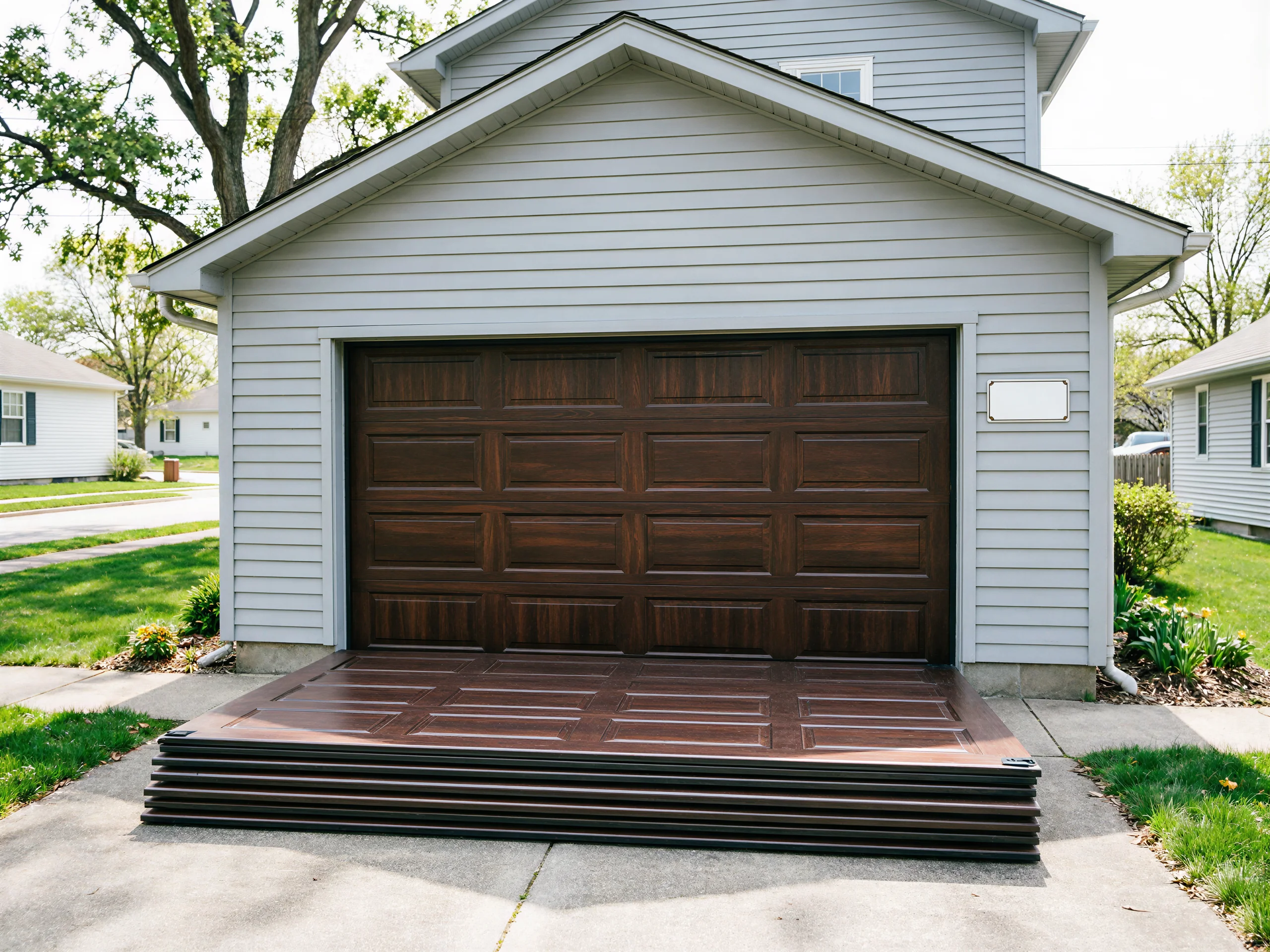
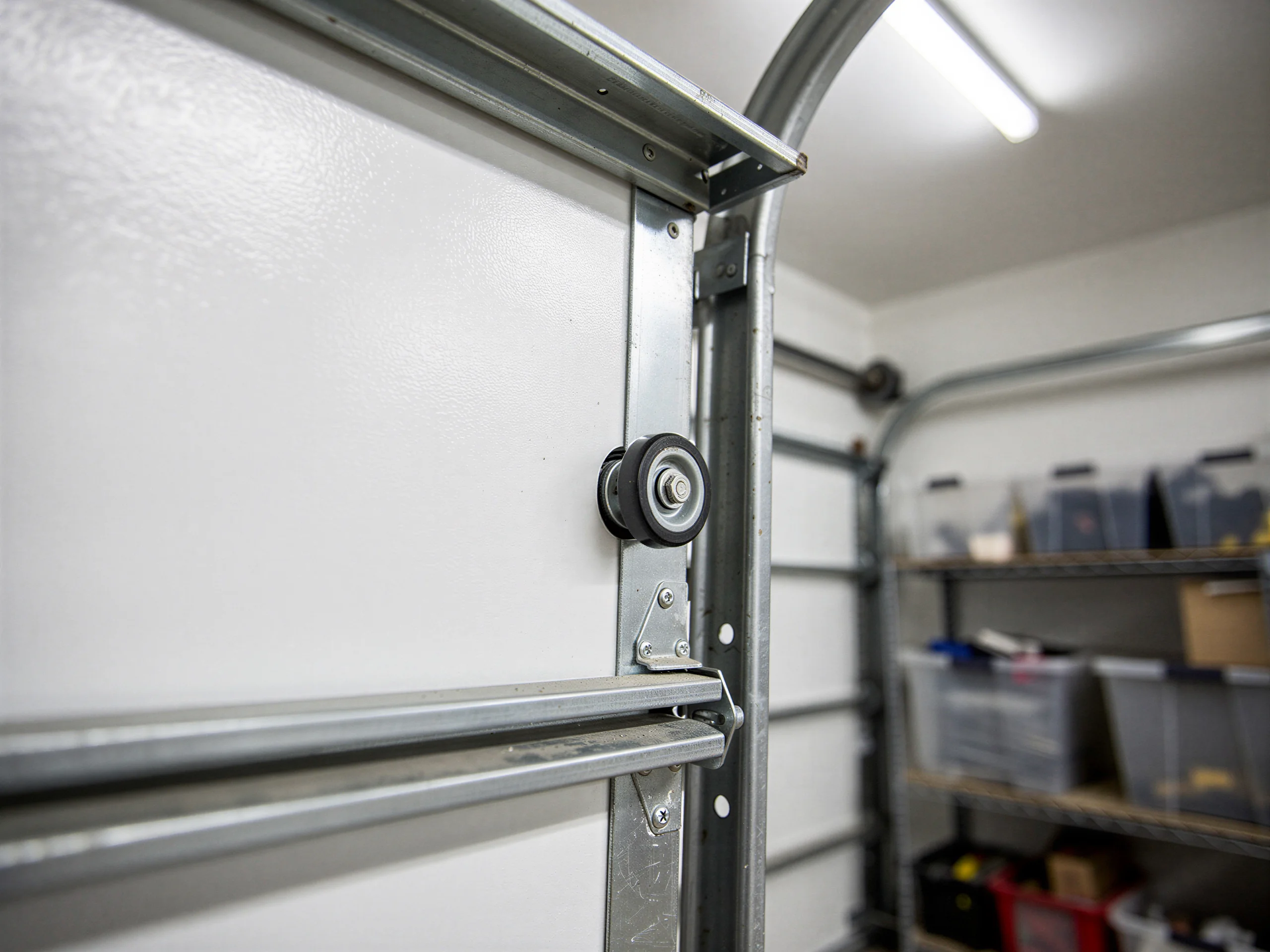
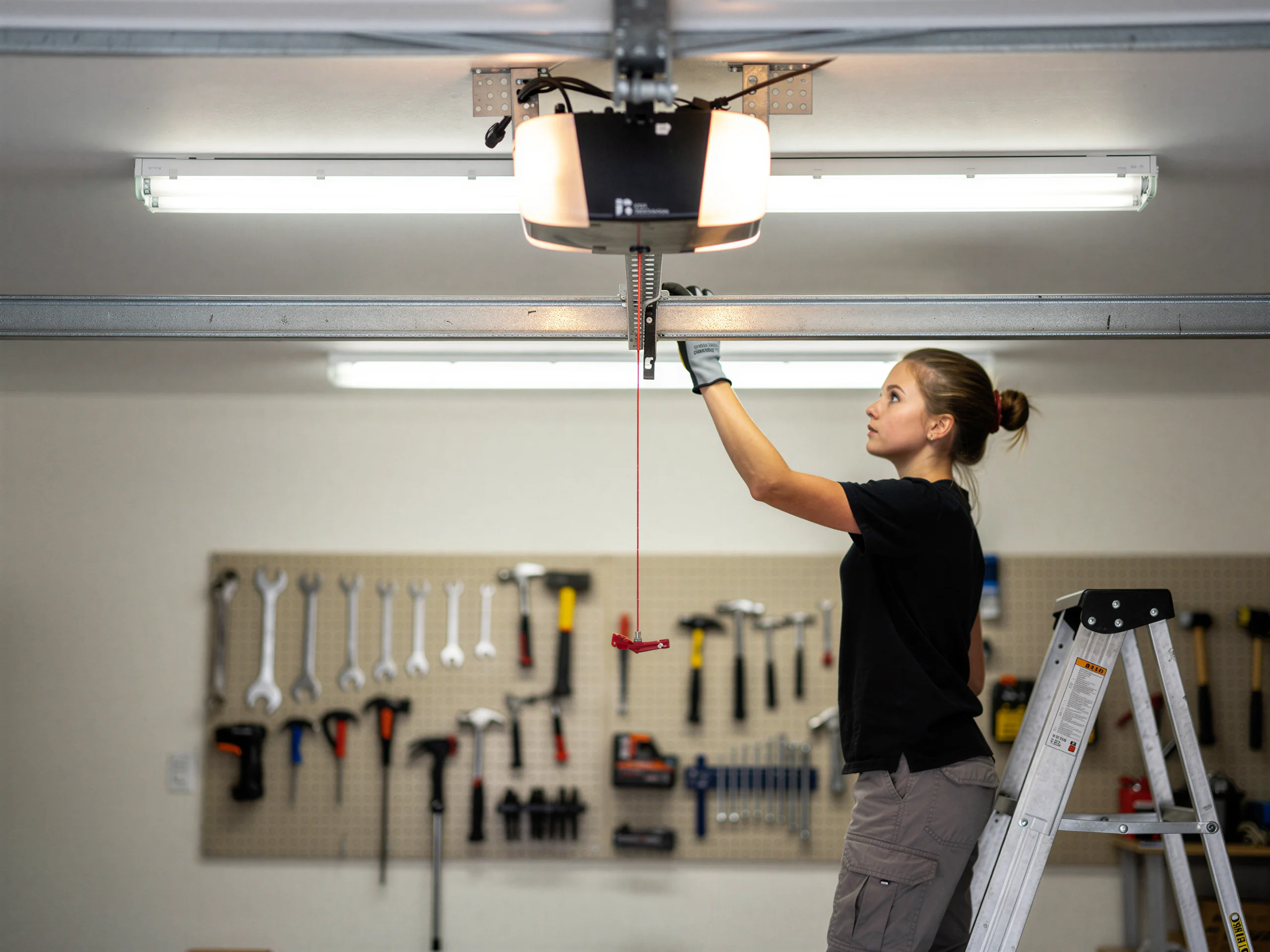
Robins' housing stock centers on 2002, decades newer than the broader service area's median year built of 1977. That matters for panel damage because newer construction in this area leans toward wider two-car openings and taller sectional doors with insulated steel panels - not the narrow single doors and thinner steel common on older stock. Those bigger panels catch more wind load and take a harder hit from a backed-up car or a dropped ladder simply because there's more surface area to hit. The service area sits in a cold, moderate climate band, so panels here also deal with seasonal freeze-thaw cycling - a panel that's already dented tends to crack at the seam faster once ice works into the gap. We see fewer panels rusted through from age here than in the older pockets of the territory, and more panels bent from impact or buckled from a door that's been forced while partially frozen to the slab.