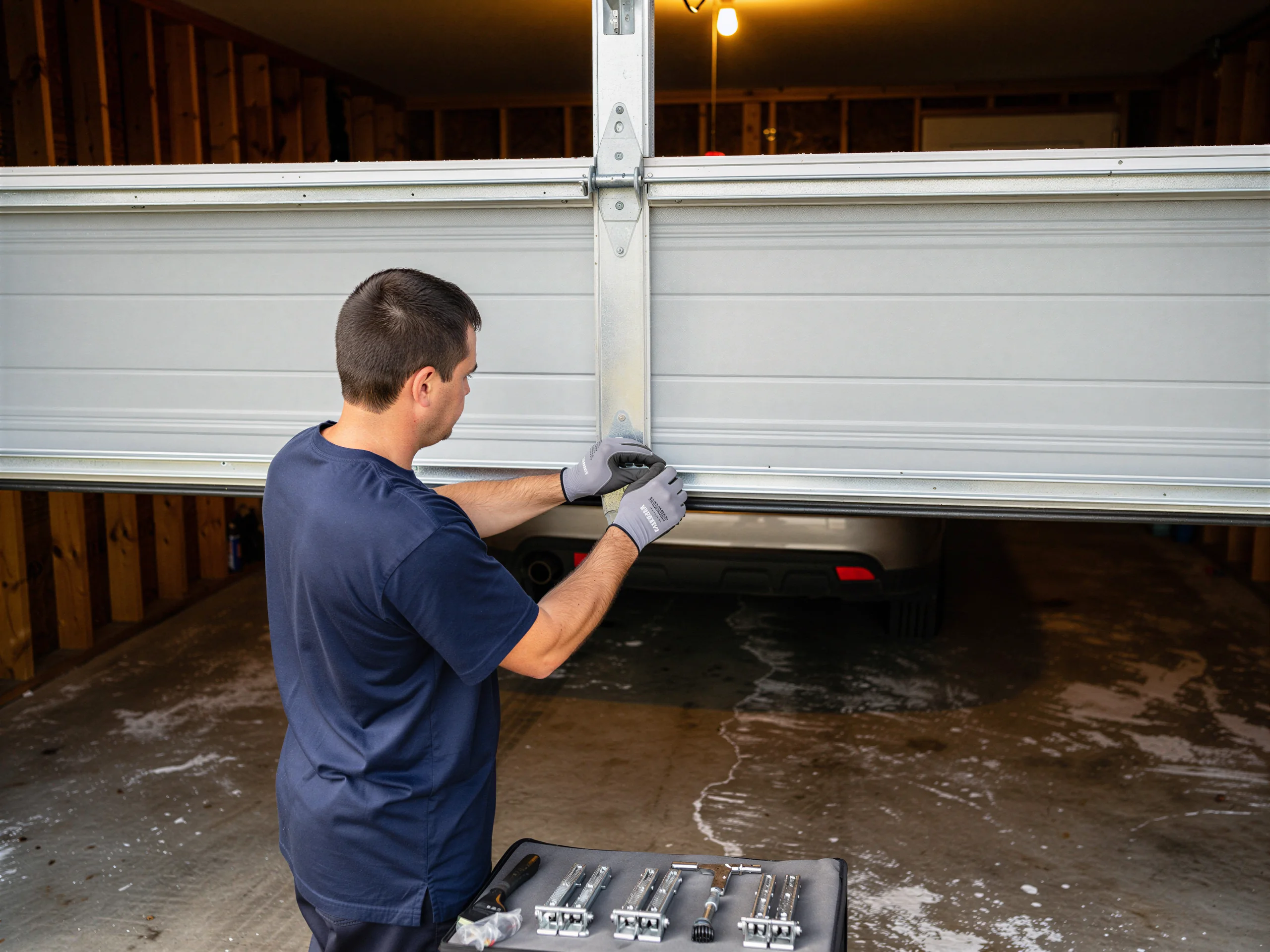
Spring tension behind panels
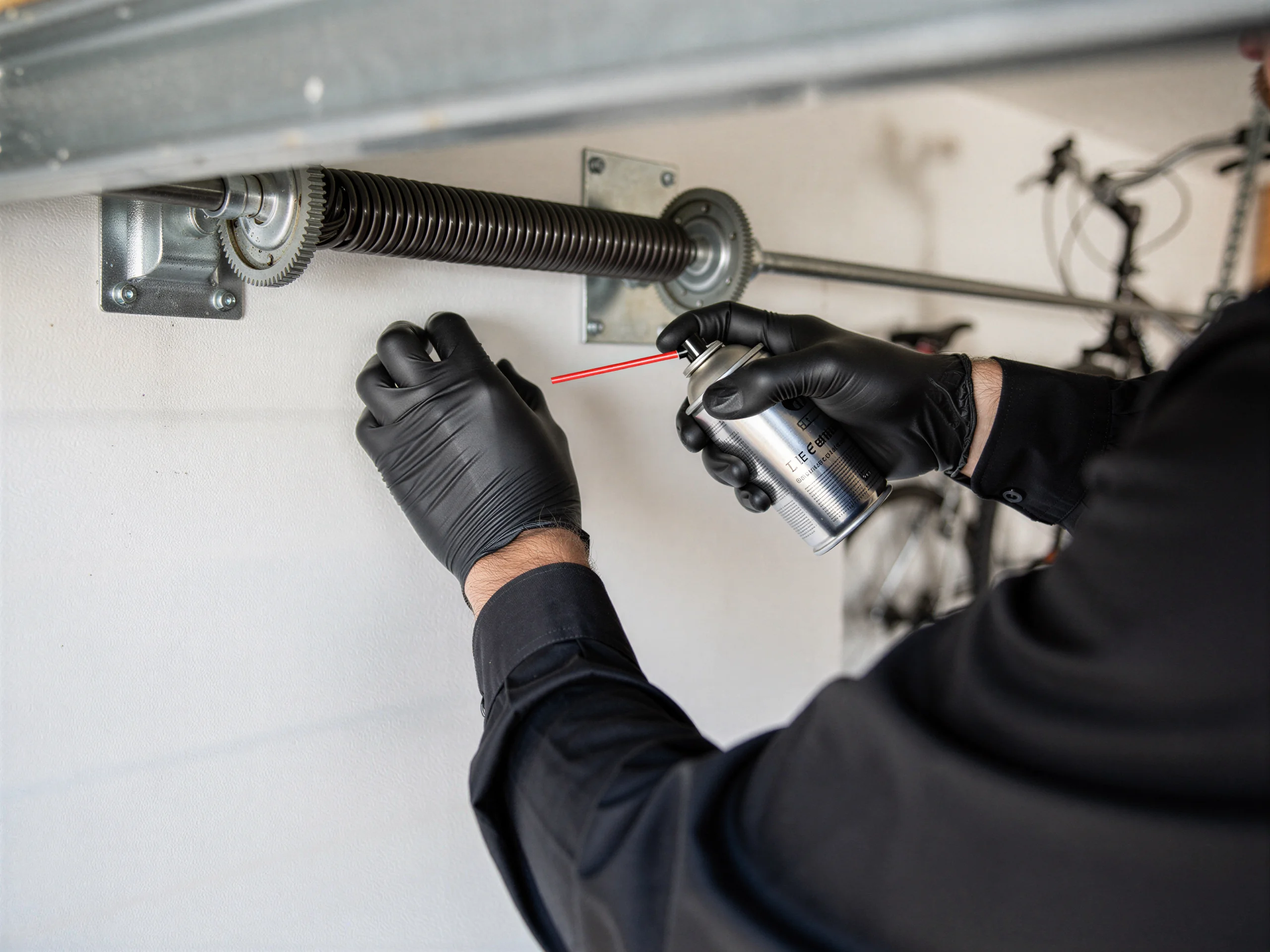
The part that trips people up is that panels on a sectional door are under spring tension even when the door's down, and pulling the wrong bolt on a double door with a broken spring is how people get hurt.
Hiawatha, Cedar Rapids
Hiawatha's housing dates mostly to the early 1990s, newer than much of Cedar Rapids. That changes which panels fit and what breaks first. We drive out from Cedar Rapids to fix it.
Booking
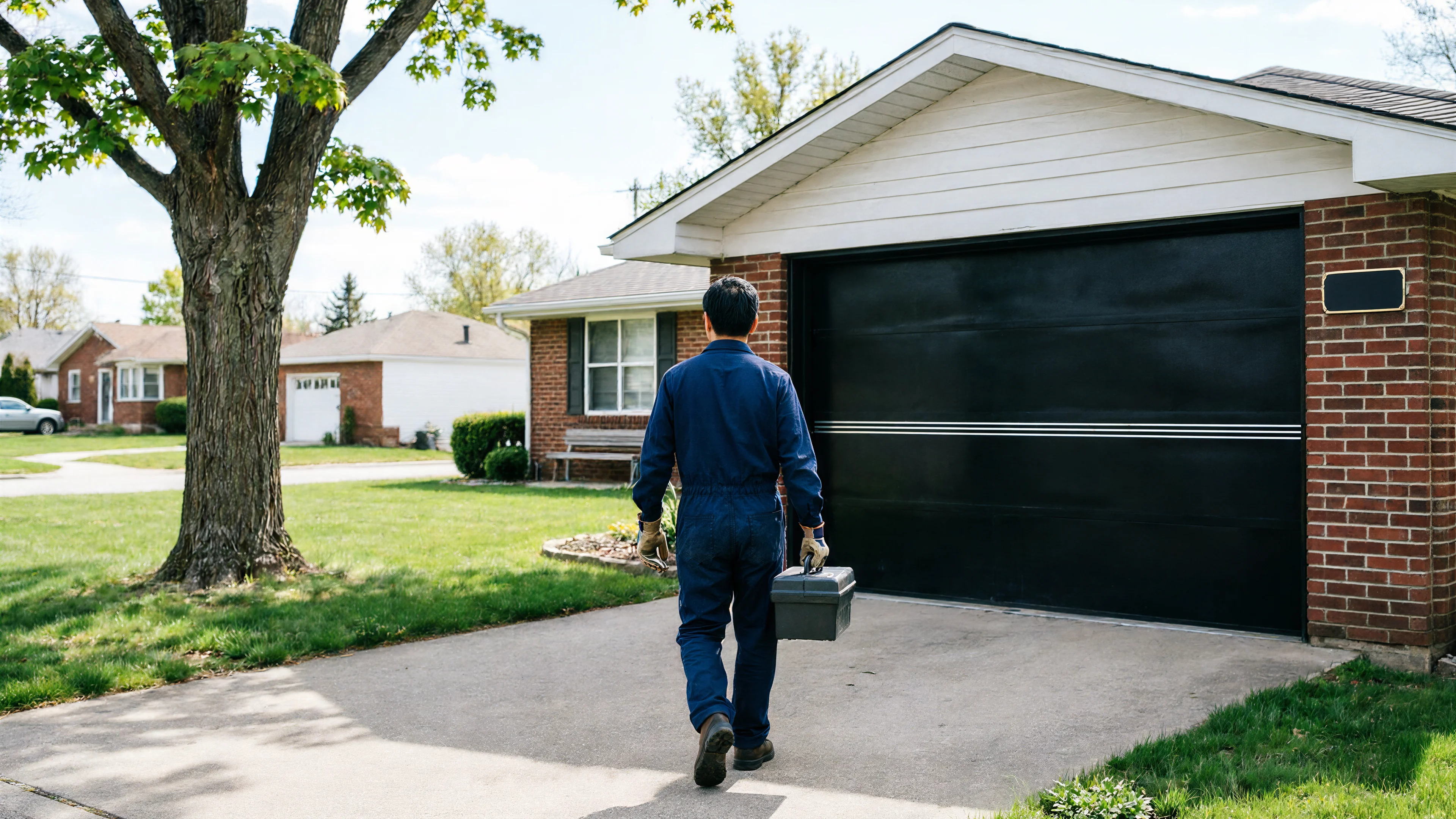
We run out of Cedar Rapids, six miles down the road, so a Hiawatha job doesn't sit any further back in the queue than one across town.
What speeds things up on our end is knowing what you're working with before the truck leaves: door brand if it's on a sticker inside the top panel, approximate age, and which panel section is damaged - top, bottom, or one in the middle.
Because Hiawatha's houses mostly went up around the early 1990s, most doors here are steel sectional units rather than the older one-piece or wood-composite styles you find on the 1960s side of the metro. That narrows down what we bring on the truck before we even pull in the driveway.
If you can get a photo of the full door and a close shot of the damaged panel, send it ahead. It tells us whether we're dealing with a factory color that's still in production or one that's been discontinued, which matters more here than it does on an older door where mismatched panels are already expected.
DIY or pro
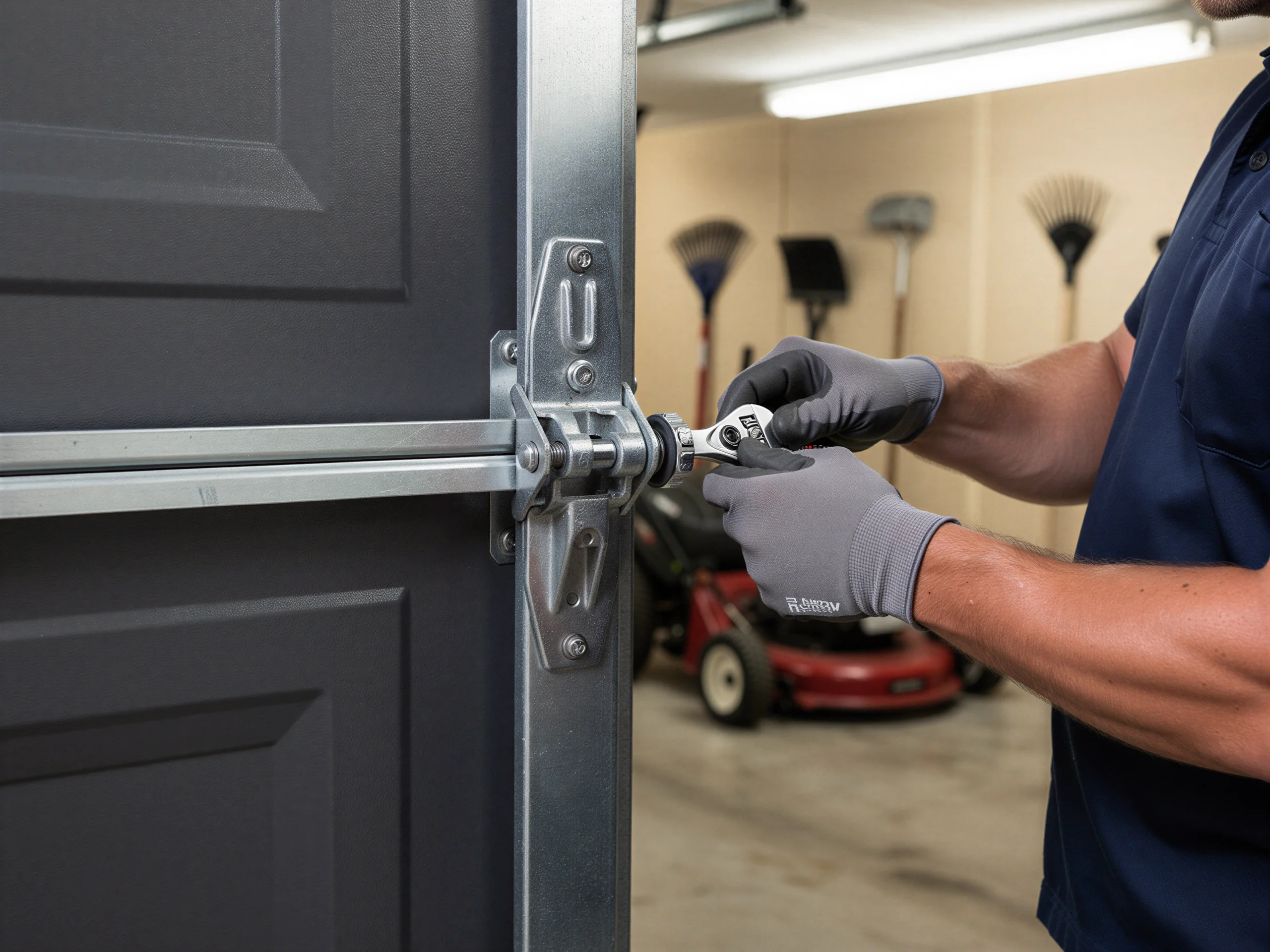
Swapping a single panel section sounds simple and sometimes it is - a few bolts, slide the old section out, slide the new one in.
The part that trips people up is that panels on a sectional door are under spring tension even when the door's down, and pulling the wrong bolt on a double door with a broken spring is how people get hurt.
We won't talk you out of a one-panel job if you're handy and the door is unplugged from the opener first, but we will say this: matching a factory panel color on a house built in 1992 is not guesswork you want to do twice. Get the model number off the sticker before you order anything. The honest limitation here is that we can't always get an exact color match fast.
Steel door manufacturers change paint runs over the decades, and a panel ordered today may come in a shade off from one installed when the house was new. On some jobs the better call is replacing two matching panels, or the whole door, rather than living with a visible seam. We'll tell you which situation you're in before we order anything.
Local causes
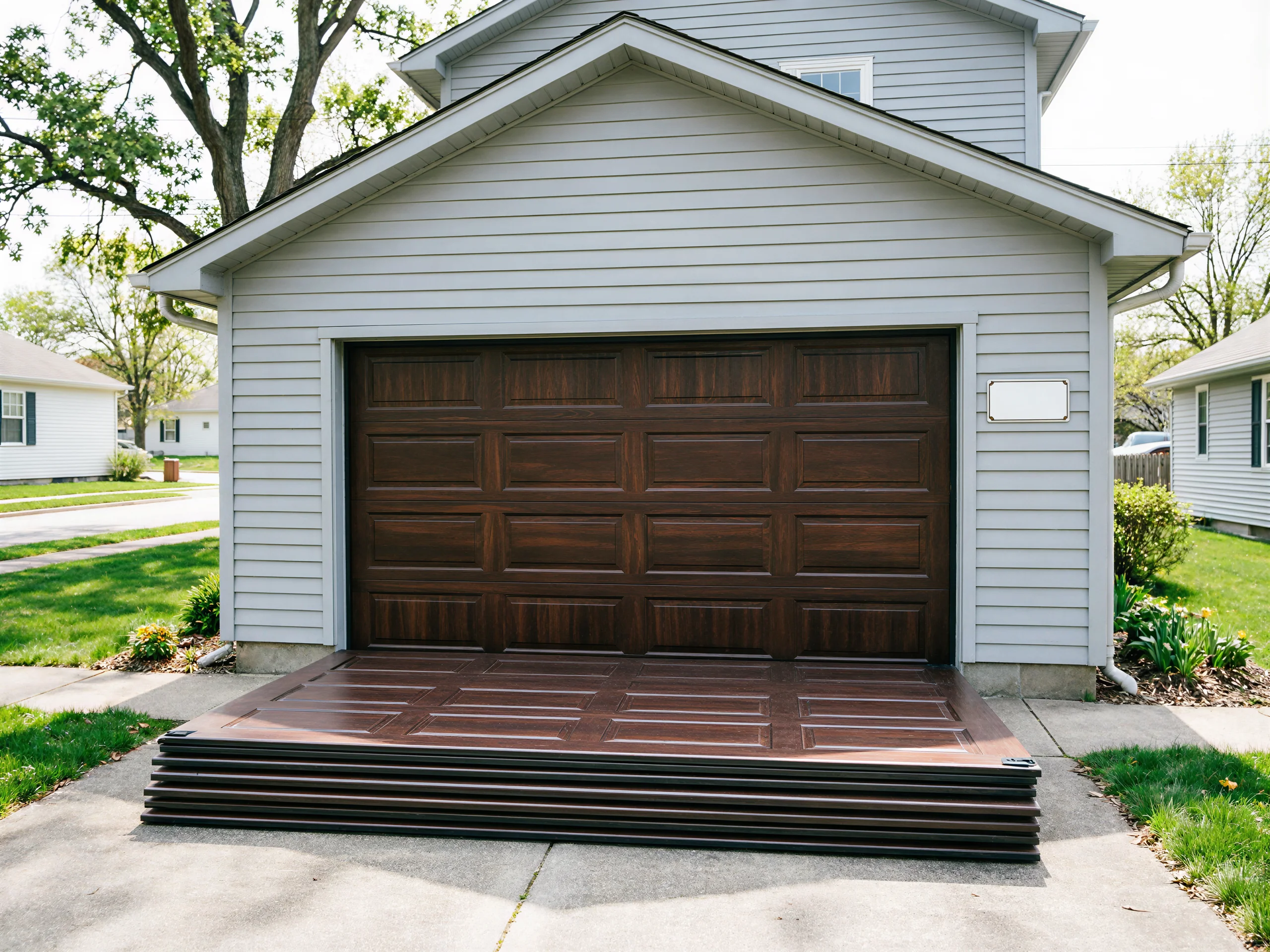
Hiawatha's garages mostly hold steel sectional doors with a factory insulation core, built to the specs common from the 1980s through the 2000s. That's a different failure pattern than the older one-piece and wood-panel doors common in Cedar Rapids's 1960s and 70s stock. Steel panels here dent rather than crack outright - a car bumper tap, a bike leaned against the bottom section, a basketball off the rim. The insulation core inside means a dent on the outer skin often doesn't go all the way through, but it does leave a visible crease that doesn't pop back out.
The cold moderate climate this area sits in adds its own wear. Steel contracts in deep cold, and on an older panel the seam between the outer skin and the insulated core can start to separate at the edges after enough winters of that expansion and contraction. It shows up first as a slight bow along the bottom panel, the one closest to the ground and the cold concrete. That's usually the first section we get called out to replace.
Warning signs
The most common call is a bowed or dented bottom panel - the one that takes the brunt of car doors, trash cans, and kids' bikes, and sits closest to the cold slab in winter.
You'll notice it first as a door that doesn't sit flush at the bottom, or a visible crease that catches light differently than the rest of the panel. A second pattern is a cracked seam where two panel sections meet, usually after a few years of the metal flexing with temperature swings.
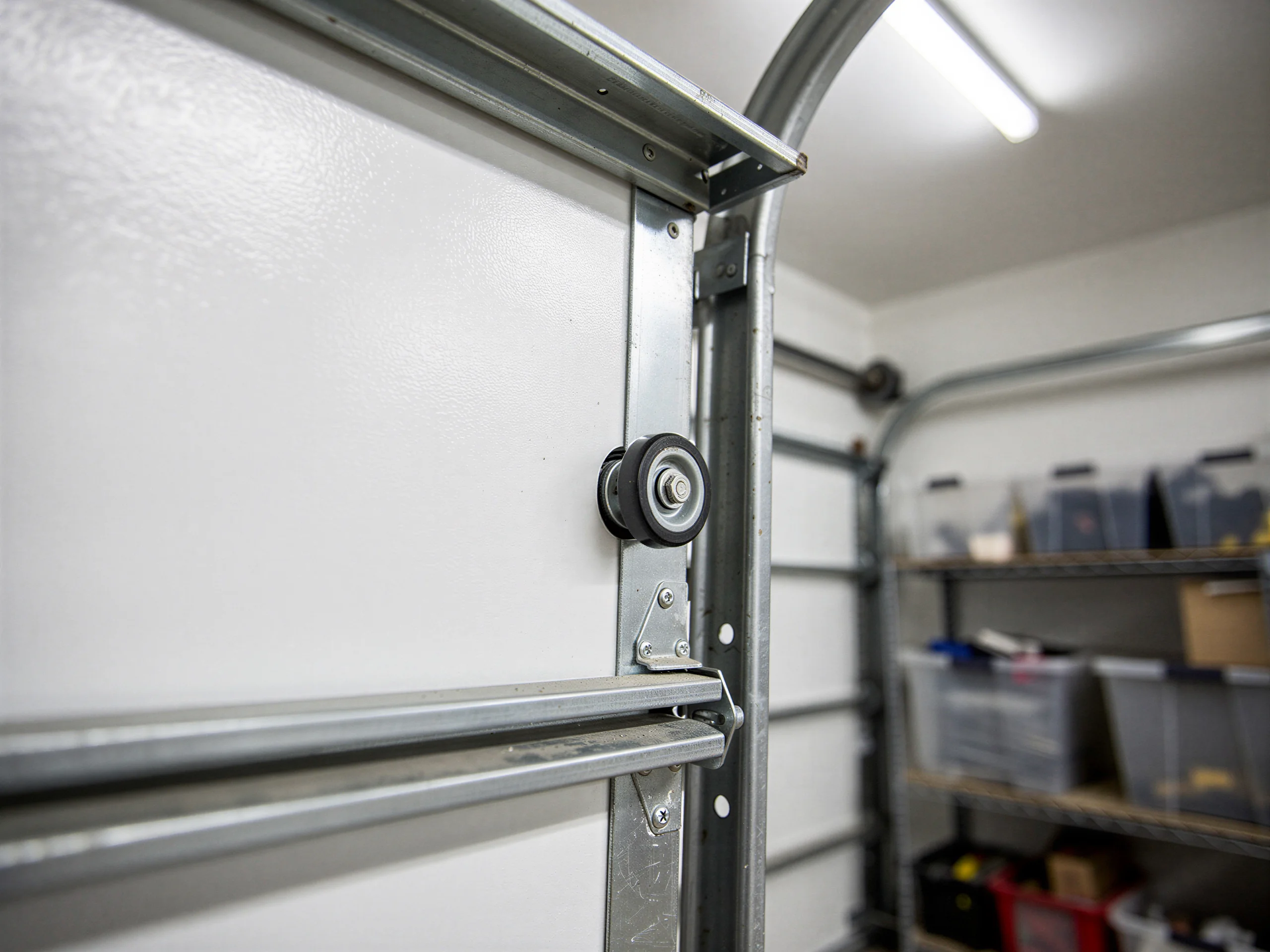
It's not always obvious from the driveway - sometimes the first sign is a slight gap letting daylight through, or a rattle when the door runs that wasn't there before. Less common but not rare: a panel section that's been struck hard enough to bend the steel track rail it rides in, not just the panel itself.
That one needs a look at the rollers and track alignment too, not just the panel, because replacing the panel alone won't fix a door that's binding on a bent rail.
On the truck
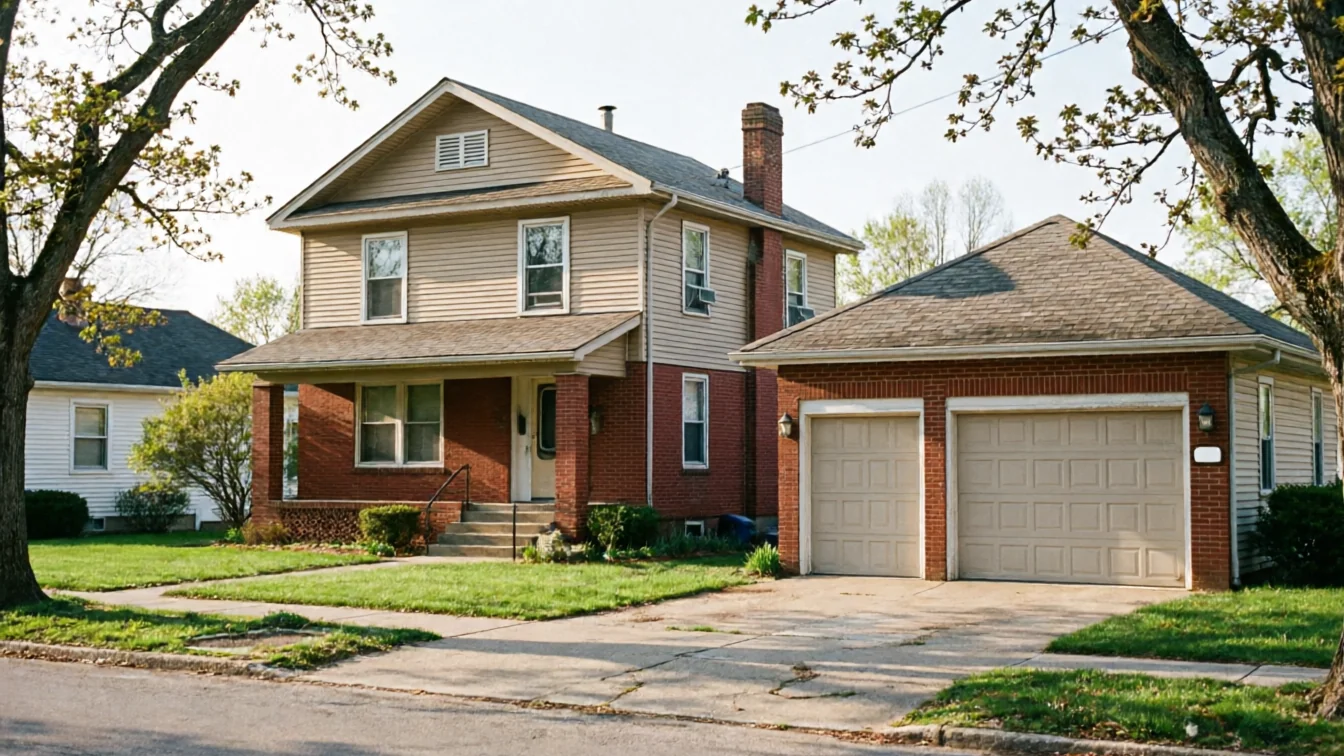
Because most doors in Hiawatha are steel sectional units from the newer end of the build-year range, we stock replacement panels sized for that era of door rather than the older one-piece styles still common elsewhere in the service area. That includes insulated panel sections built for the cold moderate climate band this region sits in - a factory foam or polystyrene core matters more here than it would in a milder climate, since it's doing real work keeping the garage above outdoor temperature through the winter.
We carry panels in the common factory widths and heights for residential sectional doors, along with the end stiles and hardware that go with a single-section swap. What we don't always have on the truck is an exact color match for a specific production run from a specific year - that part sometimes needs a short order. We'll tell you up front if your door is one of those rather than installing something that'll look mismatched the day it goes up.
Downtime
A single panel swap where we're carrying the right size and the color is a current production run is usually a same-visit fix - the door comes back down functional before we leave.
Where it slows down is color matching on an older run, or a panel style that's been phased out by the manufacturer, which can mean ordering the part before we schedule the install.
We can't give you a universal number of days here because it depends on the door brand and whether the exact panel is still in production - that's a question we answer once we have your model number, not before.
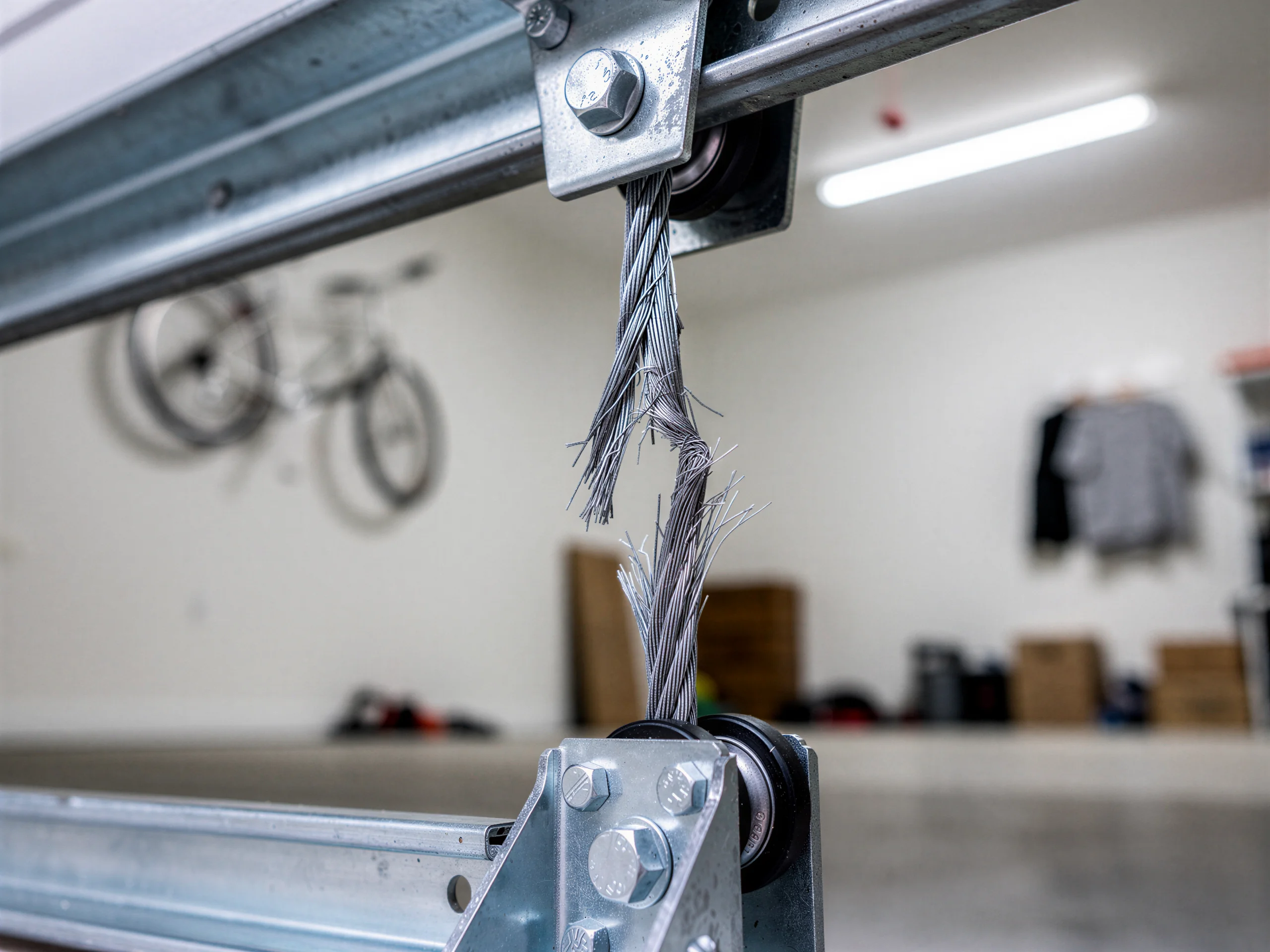
What we can tell you is that a door left non-functional on a broken spring or cable is a safety issue, not just a cosmetic one, and that part of the job we treat as the priority regardless of how long the cosmetic panel match takes.
Questions
If your door's panel style and color are still in current production, yes, close enough that it won't stand out. If the door dates further back and the manufacturer has changed paint runs or discontinued that profile, we may need to order a close match or talk through replacing more than one section so the mismatch isn't visible.
Mechanically it's one of the simpler panel jobs, but the door has to be fully disconnected from spring tension first, and a double door with a failing spring is not something to open up solo. If you're confident on the mechanical side and the door's unplugged from the opener, it's doable - get the model sticker info before ordering the part.
On steel sectional doors, the bottom panel sits closest to cold concrete and takes the most physical contact - car doors, bikes, trash cans. Combined with the metal's contraction in cold weather, that panel often shows wear first, either as a visible bow or a seam that starts to separate at the edge.
We carry panels sized for the steel sectional doors common to newer construction. Older one-piece or wood-composite doors sometimes need parts sourced separately, and on some of those the repair cost gets close enough to a new door that replacement makes more sense than patching a discontinued panel.
Explore more
Ready when you are
Cedar Rapids Garage Door Pros repairs and installs garage doors, springs and openers in Cedar Rapids, IA and the surrounding area.